
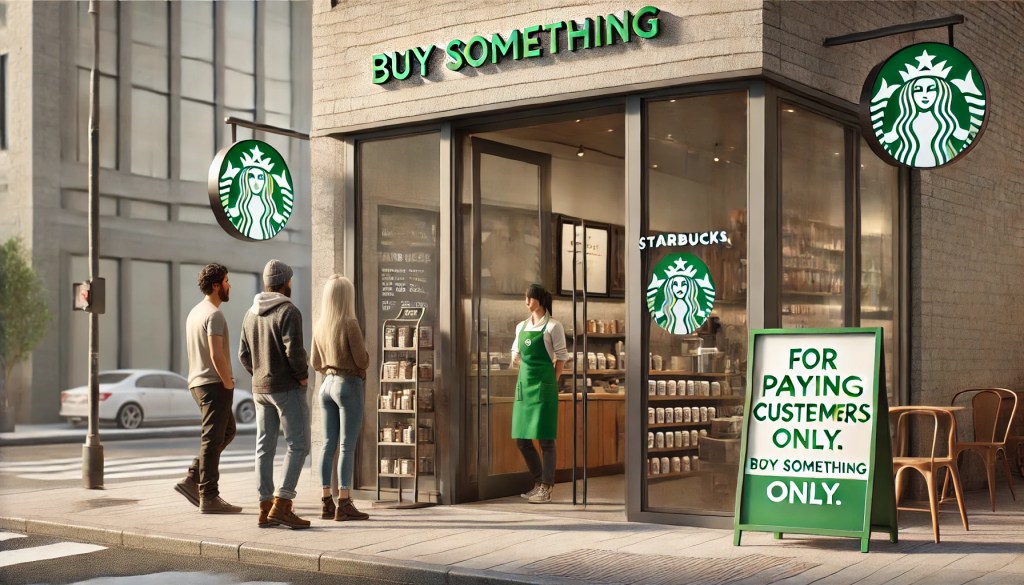
Starbucks, a global icon of the coffee industry, has long prided itself on creating a “third place”—a welcoming space between home and work. However, the company has reintroduced its controversial “buy something” policy across North America, requiring customers to make a purchase to occupy its cafes. Under this policy, customers must make a purchase to occupy its cafes—a reversal from the open-door policy Starbucks adopted in 2018.
This decision has sparked widespread debate over its implications for inclusivity, customer experiences, and brand identity. However, it also raises questions about whether financial pressures in the coffee sector are driving the decision.
From inclusivity to exclusivity
The original open-door policy was implemented after a racial discrimination incident at a Philadelphia Starbucks, where two Black men were arrested while waiting for a friend without making a purchase. In response to the backlash, then-CEO Kevin Johnson announced sweeping changes, including mandatory anti-bias training and a commitment to inclusivity. “We want our stores to be welcoming places for everyone,” Johnson emphasized at the time.
For five years, the open-door policy allowed anyone to use Starbucks’ spaces and restrooms, regardless of whether they were paying customers. However, critics now argue the reinstated “buy something” rule may alienate vulnerable communities, including individuals experiencing homelessness or those seeking shelter in extreme weather. Advocacy groups claim the move could strip away a layer of accessibility that had made Starbucks a symbol of modern inclusivity.
On social media, the reaction has been swift and polarizing. Posts on platforms like X (formerly Twitter) have accused the company of abandoning its values. One post read “This is not the right move for Starbucks and I don’t even go there for the coffee.”
https://platform.twitter.com/widgets.jsThis is not the right move for Starbucks and I don’t even go there for the coffee. I go for the breakfast sandwiches before a track meet https://t.co/bsrt6eFA9C— Dark Lord Zachario|#anipoke (@ZachPokemaster) January 14, 2025
A balancing act for customers and employees
Proponents of the updated policy argue it’s a necessary step to address operational challenges. Overcrowded stores and overextended resources in busy urban areas have strained Starbucks’ ability to maintain a high standard of service. According to Fox 5 NY, some customers support the change, believing it creates a better environment for those who make purchases and use the space responsibly.
Yet, detractors fear the move undermines the brand’s core appeal as a welcoming space. Many loyal patrons view Starbucks as more than a coffee shop—it’s a place to unwind, meet with friends, or work creatively. A freelance writer told AP News, “I used to go there for inspiration while working on my novel. Now it feels like walking into an airport lounge—you’re only welcome if you’ve paid your dues”
Enforcing the “buy something” policy also creates new challenges for Starbucks employees, who are now responsible for policing store spaces. Baristas, already juggling fast-paced workflows, may find themselves in uncomfortable situations when asking non-paying visitors to leave. A former employee noted, “It puts us in awkward situations… We don’t want confrontation; we just want everyone happy.”
Adding these responsibilities could strain employee morale and lead to negative customer interactions. This shift also highlights a broader tension between corporate policies and the practical realities faced by frontline workers.
Financial pressures in the coffee sector
While Starbucks frames the policy change as a way to improve store management, economic pressures likely played a significant role. The coffee sector has faced mounting challenges, including rising labor costs, inflation, and supply chain disruptions. These factors have squeezed margins across the industry, forcing companies like Starbucks to evaluate operational efficiencies.
At the same time, Starbucks faces growing competition from fast-food chains like McDonald’s and Dunkin’ Donuts, which have aggressively expanded their coffee offerings. In such a competitive landscape, maintaining profitability while preserving brand identity has become increasingly difficult.
For Starbucks, reinstating the “buy something” policy may reflect a calculated move to balance inclusivity with financial sustainability. However, critics warn that prioritizing short-term gains over long-term brand equity could harm the company’s reputation as a socially responsible business.
Starbucks’ decision underscores the complex dynamics of running a global business in a challenging economic climate. The company must navigate competing priorities: managing operational costs, meeting customer expectations, and upholding its mission of inclusivity. As Starbucks faces these pressures, its ability to maintain its “third place” ethos will likely be tested.
Whether this policy change is a temporary adjustment or a sign of deeper shifts in the coffee sector remains to be seen. For now, Starbucks walks a fine line between profitability and purpose, leaving customers and critics alike questioning what the future holds for the beloved coffee giant.


 Coffee Digest