

In an era marked by escalating global trade tensions and mounting market volatility, the coffee industry is treading a challenging path. As commodities like cocoa capture significant attention due to unprecedented price surges, coffee producers and stakeholders face questions about the crop’s long-term stability, investment appeal, and ability to maintain relevance.
With ongoing supply chain disruptions, climate-related challenges, and geopolitical pressures reshaping global agricultural markets, the resilience of coffee as a commodity has come under the spotlight.

The interconnected nature of global commodity markets
Global forces are shaping the future of the coffee sector, particularly in relation to rising competition from other high-value commodities such as cocoa. Trade tensions, shifts in resource allocation, producer vulnerabilities, and potential strategies for sustainability and growth are fostering an increasingly complex marketplace.
The global commodities market operates as a highly interconnected ecosystem where turbulence in one sector often triggers ripple effects in others. Coffee, one of the most traded agricultural products globally, shares deep linkages with other crops like cocoa through overlapping supply chains, shared trade dependencies, and related policy frameworks.
Cocoa has recently dominated headlines due to a dramatic near-tripling of prices in 2024, driven by adverse weather conditions in West Africa—which accounts for over 60 percent of global cocoa production—and heightened global demand for chocolate products. This surge has underscored the economic importance of cocoa to key producing nations such as Côte d’Ivoire and Ghana. However, it also raises questions about whether resources—particularly financial investments and logistical capacity—are being disproportionately directed toward cocoa at the expense of other commodities like coffee.
The coffee industry operates under similar climatic and trade pressures, making it equally vulnerable to external shocks. Despite recent price surges and a growing international focus on coffee, there is still a gross imbalance in resource allocation. To fully assess coffee’s resilience amid these shifts, it is essential to consider how broader geopolitical and trade issues are influencing its supply chains.

How do geopolitical tensions impact coffee?
Global geopolitical conflicts and trade tensions have created significant challenges for agricultural commodity markets, including coffee. The Russian invasion of Ukraine, for example, disrupted major shipping routes and drove up energy prices, both of which had cascading effects across industries reliant on global logistics networks. Coffee-producing nations, many of which are dependent on exports, were not insulated from these disruptions.
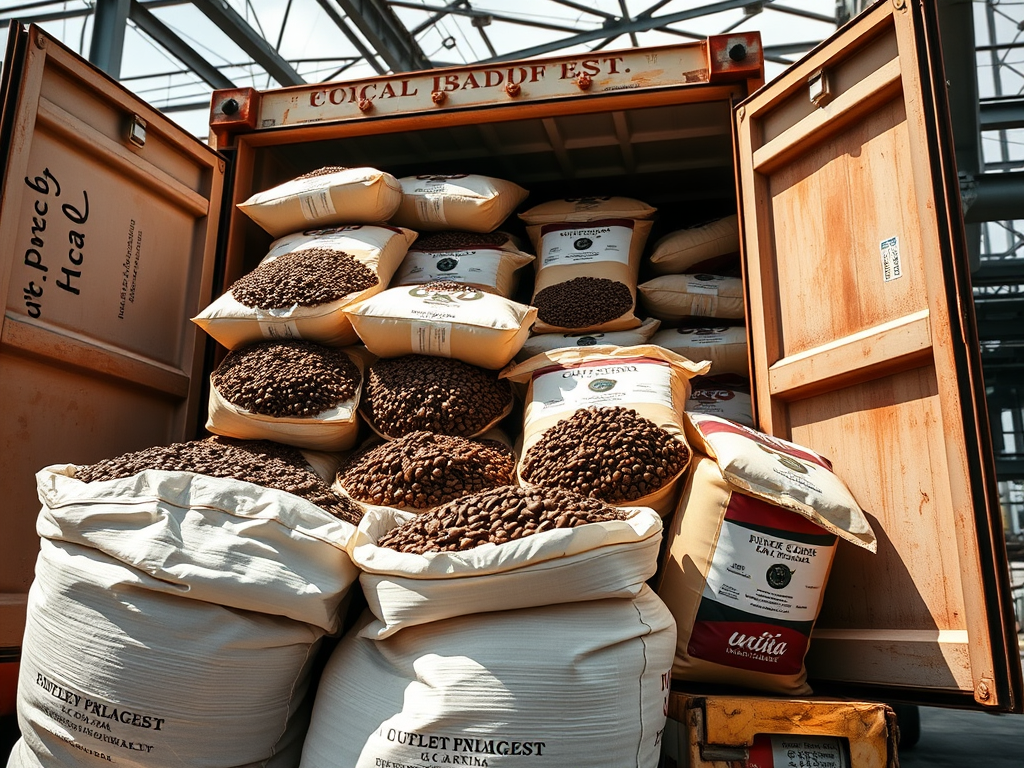
Shipping costs have surged significantly alongside logistical bottlenecks exacerbated by the COVID-19 pandemic, where container shortages and port slowdowns added additional strain on global trade infrastructure – a strain that continues into 2025. While both coffee and cocoa producers faced these obstacles, there is growing evidence to suggest that trade policies and industry efforts prioritized resolving challenges for higher-margin goods like cocoa beans over Arabica and Robusta coffee varieties. Since coffee farming is often dominated by smallholder farmers operating on slim margins, such disparities in resource prioritization present a long-term risk for the sector.
Climate challenges and producer vulnerabilities
Climate change presents another significant hurdle for coffee farmers worldwide, as shifting weather patterns increasingly jeopardize crop yields. Major coffee-producing regions in Latin America, Africa, and Asia are experiencing rising temperatures, unpredictable rainfall, and increased vulnerability to pests and diseases such as coffee leaf rust. According to research, up to 50 percent of land currently used for coffee farming is at risk of being unsuitable for cultivation by 2050 without adaptation measures.
Unlike coffee, cocoa has benefited from targeted climate adaptation programs, particularly in West Africa. For example, multinational chocolate companies have invested heavily in initiatives to promote sustainable cocoa farming practices and improve climate resilience, initiatives often missing in coffee-producing regions at the same scale. Though some organizations – such as Fair Trade International and Rainforest Alliance – have worked to address these gaps, coffee farmers remain more vulnerable to the dual threats of climate change and market instability.
This disparity raises questions about the role of governments, private-sector stakeholders, and international organizations in ensuring balanced support across commodity sectors. Without equitable investment in long-term climate solutions, coffee risks falling further behind in the race to adapt to changing global conditions.
Supply chain fragmentation and resource allocation
One of the defining characteristics of coffee production is its reliance on fragmented supply chains populated by millions of smallholder farmers. Unlike cocoa, which has seen increasing consolidation at different stages of the supply chain, coffee remains relatively decentralized. While this decentralization allows for diverse producer participation, it also complicates efforts to streamline operations and attract large-scale investment.
Reports indicate that cocoa producers benefit from stronger vertical integration, enabled by partnerships with multinational corporations that control downstream activities such as processing, packaging, and marketing. Coffee, by contrast, faces challenges in achieving similar economies of scale, with smaller producers often left vulnerable to price volatility and insufficient access to credit facilities.
Furthermore, the prioritization of high-margin goods by shipping companies further exacerbates uneven resource allocation. Cargo space is frequently allocated to goods perceived as more financially lucrative, creating additional barriers for coffee exporters already grappling with rising transportation costs. Additionally, increased demand, dwindling supply, and delays in transport have led to soaring shipping rates, directly impacting the price of coffee.

The road ahead: Balancing resilience and growth
These dynamics reveal that coffee’s position within the global commodity market is heavily influenced by a convergence of geopolitical, environmental, and economic factors. Maintaining its relevance and resilience in this volatile landscape will require coordinated efforts across multiple stakeholders. Governments, international organizations, and private-sector actors must prioritize equitable investment in coffee supply chains, ensuring that smallholder farmers have access to the tools and resources they need to adapt to climate change and market challenges.
At the same time, promoting sustainable farming practices and improving vertical integration could enhance the sector’s overall efficiency and profitability. By fostering greater collaboration among coffee-producing regions and creating policy frameworks that support both smallholder farmers and large-scale enterprises, the industry can build a more stable future.
The resilience of coffee amid global commodity fluctuations depends not only on its adaptability but also on the collective willingness of stakeholders to address its challenges head-on. Through strategic investments and a commitment to sustainability, the coffee industry can secure its place in the ever-evolving global marketplace.




 Coffee Digest