
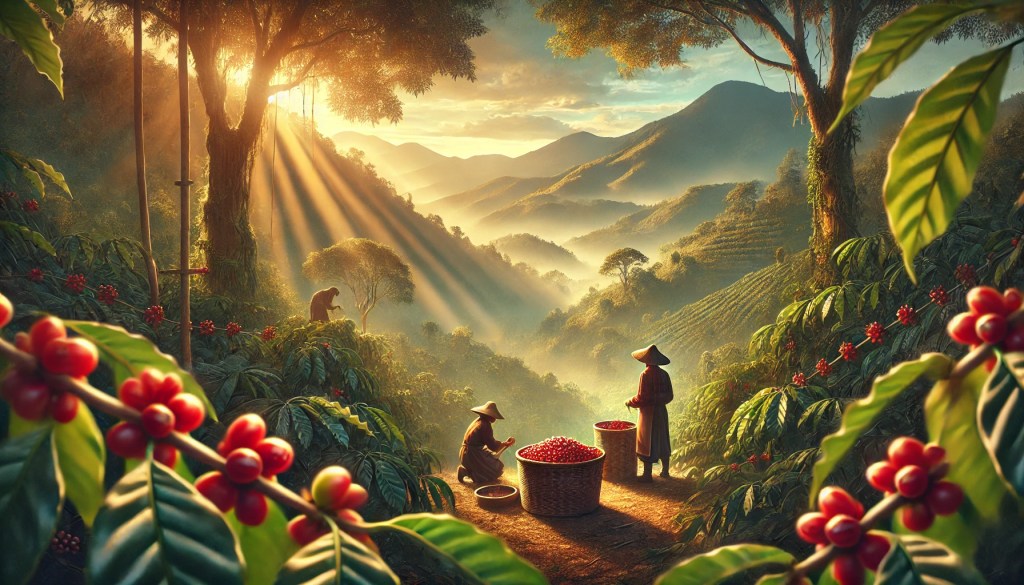
In the past decade, the specialty coffee industry has expanded rapidly, with consumers increasingly interested in the origins and production methods of their coffee. This rise in demand for ethically sourced, high-quality beans has led to marketing campaigns emphasizing the “exotic” nature of coffee origins, often portraying them as mysterious or untouched by modernity.
While these narratives appeal to Western consumers seeking an authentic experience, they raise significant ethical concerns. Is specialty coffee marketing exoticizing its origins, and what are the implications for both producers and consumers in the global coffee supply chain?
The attraction of exoticism in specialty coffee marketing
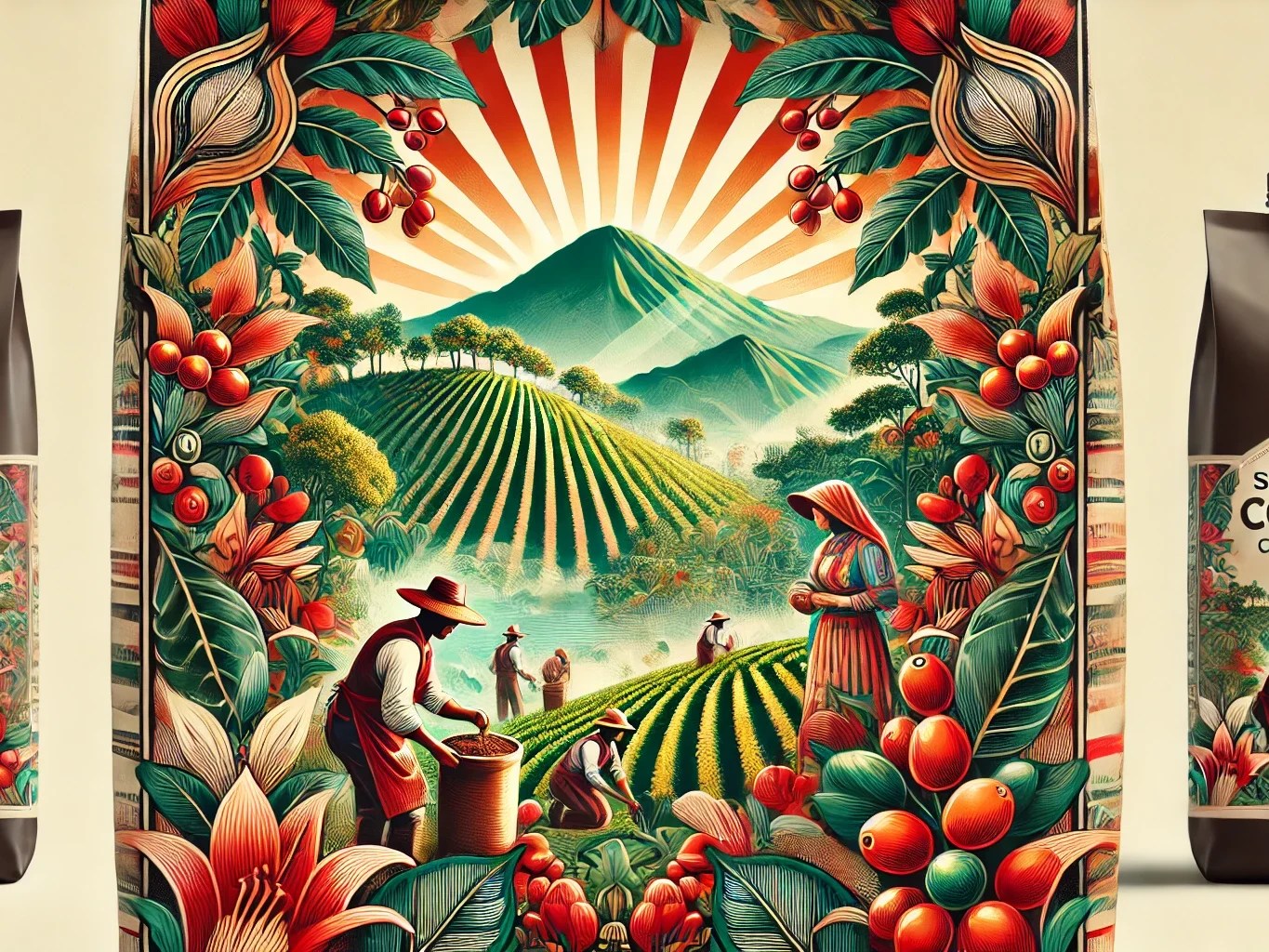
Exoticism is the practice of depicting foreign cultures or locations as unusual or intriguing, making them more desirable to consumers. In the global consumer market, this is often achieved through romanticized imagery, a tactic used in products like tea, chocolate, and coffee. In specialty coffee, brands frequently use visuals that evoke a sense of adventure tied to coffee-growing regions such as Ethiopia, Guatemala, or Colombia. Packaging designs often showcase rugged mountain terrains, lush forests, or small-scale farmers working in picturesque backdrops. Narratives highlight the “purity” of traditional farming, emphasizing methods like hand-picking and sun-drying to craft an image of authenticity.
While these narratives resonate with consumers seeking unique and “authentic” products, they oversimplify the complex realities of coffee-producing regions. In her book Coffee Culture: Local Experiences, Global Connections, Dr. Sarah Lyon notes that “the fetishization of origin stories often reduces complex social realities into simplistic tropes.” Such marketing risks framing coffee-producing regions as idyllic but primitive, reinforcing stereotypes without addressing the significant socio-economic challenges or climate change impacts faced by farmers.

Colonial narratives and power dynamics in coffee marketing
A critical issue with exoticized coffee marketing is its potential to reinforce colonial-era power imbalances. Coffee-growing nations, predominantly in Africa and Latin America, supply wealthier markets in the United States and Europe. Historically, these trade relationships have disproportionately benefited developed economies, leaving developing countries to contend with exploitative labor practices and economic instability. This inequity persists today as multinational corporations profit from commodities like coffee, often sourced at low prices from countries struggling with poverty.
By portraying coffee origins through exoticized narratives, specialty brands risk perpetuating outdated colonial dynamics. Visualizations that depict coffee-growing regions as “untouched paradises” filled with resilient yet impoverished farmers can promote a paternalistic view. These portrayals frame Western consumers as saviors, suggesting that their purchases—especially those involving fair-trade or ethically sourced coffee—are vital for rescuing farmers from their conditions. This narrative ignores the historical context of exploitation and the ongoing fight for fair wages, workers’ rights, and economic autonomy faced by many farmers.
Despite movements and efforts to create more equitable trading partnerships, many smallholder farmers still struggle to access the specialty coffee market. Issues such as fluctuating commodity prices, market volatility, and the increasing impacts of climate change continue to challenge these communities. In addition, rising temperatures and shifting weather patterns are pushing coffee cultivation to higher altitudes, threatening the livelihoods of farmers who cannot afford the investments needed to adapt.
Oversimplification of coffee farming communities
Another problematic aspect of exoticism in coffee marketing is the oversimplification of coffee-growing communities. Many specialty coffee brands reduce the lives, traditions, and struggles of farmers to generic narratives designed to appeal to Western tastes for authenticity, often ignoring the diversity and complexity of these regions. Countries like Brazil, Kenya, and Vietnam each have distinct histories, cultures, and economic structures, yet these differences are frequently glossed over in marketing that bundles different regions under simplistic themes of “tradition” or “rustic beauty”
This oversimplification can distort consumer perception, leading buyers to believe they are supporting communities merely by purchasing coffee marketed as “ethically sourced” or “sustainable.” However, certifications like Fairtrade and Rainforest Alliance, while helpful in promoting better working conditions and environmental sustainability, do not provide a complete solution to the deep-seated political and economic issues in these regions. For example, research from the International Institute for Environment and Development suggests that while certification programs offer some improvements, their benefits are often limited and unevenly distributed among producers.
The limitations of these certification programs are further supported by findings from the Stanford Social Innovation Review, which discusses how the benefits for coffee farmers remain uneven. Although fair-trade certifications establish a price floor to protect against market volatility, only a fraction of a farmer’s crop may qualify for these premiums. As a result, many farmers are forced to sell a substantial portion of their harvest at lower, market-determined prices, leading to unequal economic impacts across different producers.
Similarly, the CIFOR-ICRAF Knowledge Hub points out that while certification programs aim to promote sustainability and fair trade, they often do not equitably benefit all participants and their effectiveness can vary greatly depending on regional factors and implementation strategies. While they may address certain socio-economic issues, they frequently fail to tackle the more profound structural inequalities inherent in the coffee supply chain, highlighting a need for more comprehensive and context-sensitive approaches.
Moreover, these marketing strategies frequently overlook the realities of mechanized farming, modern agricultural technologies, or the aspirations of young farmers who seek innovation and economic growth. By focusing solely on traditional methods of cultivation, brands risk creating a false image of coffee-growing communities as being locked in time, undermining their agency and efforts toward modernization.

Ethical considerations for the future of coffee marketing
As consumers become more concerned about the ethical implications of their purchasing decisions, it is crucial for specialty coffee marketers to move beyond exoticized imagery and narratives. Instead of relying on outdated stereotypes, companies should present a more nuanced portrayal of coffee-growing regions—one that acknowledges the complexities and challenges faced by agricultural communities while celebrating their resilience, ingenuity, and cultural diversity.
Brands can play a key role in educating consumers by emphasizing transparency throughout the supply chain, promoting direct or mutually beneficial relationships with farmers, and using data-driven storytelling to convey the economic, social, and environmental realities of coffee production. For instance, studies show that authentic storytelling, when combined with factual information, can enhance consumer trust and engagement. Highlighting specific examples of collaboration with local organizations or technological advancements embraced by coffee-growing countries could provide a fuller picture of the region’s dynamism.
Additionally, robust certifications and partnerships with local cooperatives can help ensure that fair trade and sustainable practices genuinely benefit coffee producers rather than merely serving as marketing tools. More importantly, showcasing the modernization and innovation in coffee-producing countries will help shift perceptions from traditional and static views to more dynamic and evolving narratives.
While exoticized marketing may appeal to certain consumer desires, it is critical for brands to recognize its potentially harmful implications and work towards more responsible and accurate representations of coffee-growing communities. Only by doing so can they support not only ethical consumer behavior but also sustainable development for the coffee farmers at the heart of the industry.




 Coffee Digest