

India, traditionally celebrated for its rich tea heritage, is emerging as a formidable force in the global coffee industry. Riding on impressive growth in both volume and value, India’s coffee exports experienced a marked surge between April and September 2024, positioning the nation as a key player on the international stage.
According to the Coffee Board of India, the country exported 2.2 lakh tonnes of coffee during this six-month period — a notable 15% increase compared to the same period last year – and export revenues rose sharply by 55%. These statistics highlight not only the growing demand for Indian coffee, but also raise pertinent questions about the sustainability of this growth amid rising global demand.

Consistent export growth is driving India’s success
The recent spike in Indian coffee exports continues a multi-year trend of steady expansion. This growth in international trade can be attributed to improved production techniques, heightened marketing efforts, and an increasing focus on quality control. Karnataka remains India’s top coffee-producing state, accounting for around 70% of the country’s output, while Kerala contributes 20%, mainly from regions like Wayanad. Tamil Nadu follows with a 5.7% share.
In comparison to the previous fiscal period, India exported approximately 1.91 lakh tonnes between April and September 2023, according to the Coffee Board of India. The increase to 2.2 lakh tonnes this year highlights advancements in both cultivation and distribution processes.
While the volume of exports increased by 15%, the more substantial 55% boost in revenue signals that Indian coffee varieties are fetching higher prices on global markets. Industry experts attribute this rise in profitability to heightened demand for premium-grade beans and evolving consumer preferences, especially in specialty coffees.
Key markets driving global demand
India’s coffee has found favor in several major international markets, with Italy, Germany, and the United Arab Emirates (UAE) emerging as leading importers. Italy, as one of India’s largest buyers, consistently imports robusta beans due to its espresso culture. The strong preference for robust, darker roasts aligns with the characteristics of Indian robusta beans, making Italy a crucial market for India’s coffee exporters.
Germany’s coffee aficionados are increasingly interested in Indian arabica variants, particularly those sourced from Karnataka and Kerala. These regions produce specialty coffees that meet the high standards demanded by German consumers, who often seek sustainable and single-origin products.
The UAE, with its rapidly expanding coffee culture driven by a young, affluent population, has also become a significant market for Indian coffee. The rising disposable incomes and evolving tastes in the UAE have created strong demand for premium arabica beans from India, positioning the country as a key supplier for this luxury-focused market. This trend positions India as a key supplier in the UAE’s coffee market, which is projected to grow at a CAGR of 8.3% from 2021 to 2026, as specialty coffee continues gaining traction in cities like Dubai and Abu Dhabi.
Sustainability and future outlook
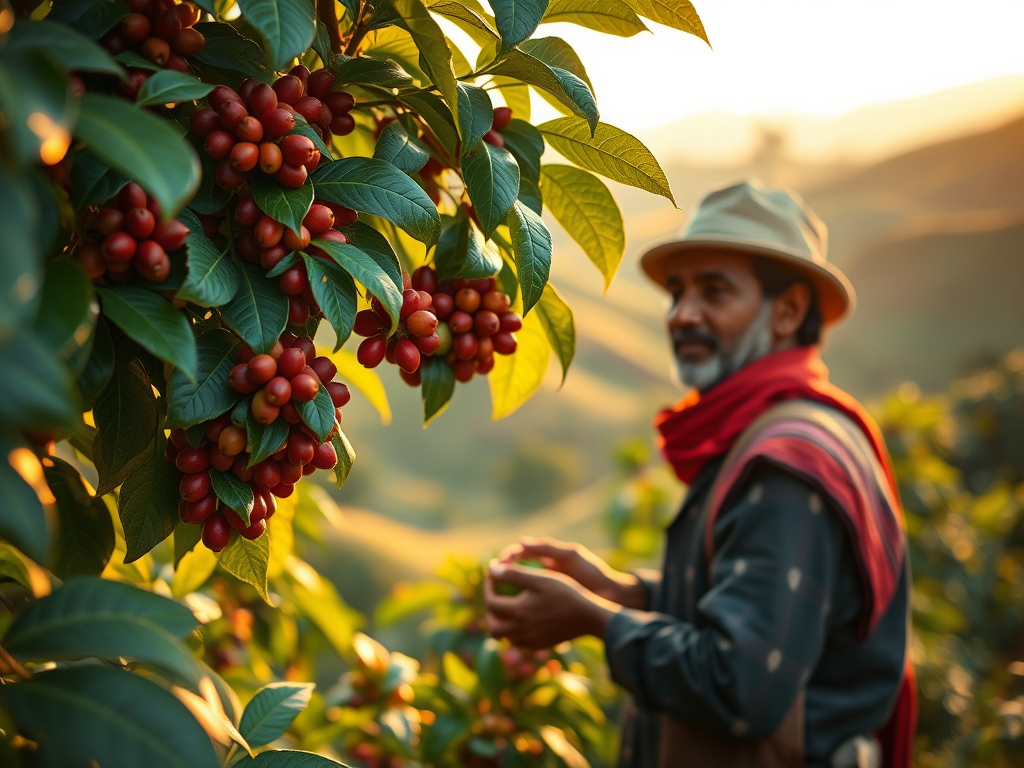
India’s coffee sector is increasingly prioritizing sustainable practices to support its growth. In key regions like Karnataka and Kerala, farmers are adopting eco-friendly methods such as shade-grown coffee cultivation, which leverages the natural canopy of native trees to create a more biodiverse environment. These regions are pivotal, as they contribute over 90% of India’s coffee production. The shift toward environmentally responsible practices is also being supported by international collaborations and government initiatives aimed at enhancing traceability and reducing deforestation impacts.
However, India faces several challenges that could hinder its ability to compete with other major coffee-producing nations like Brazil, Vietnam, and Colombia. While these countries have established extensive infrastructure and economies of scale, Indian producers must address high production costs and fragmented farming systems. Furthermore, climate change poses a significant threat; unpredictable weather patterns and rising temperatures affect crop yield and quality.
In response to global regulations like the European Union Deforestation Regulation (EUDR), Indian coffee producers are integrating advanced technologies such as geo-tracking to ensure that their products meet stringent sustainability criteria. This opens opportunities for Indian coffee to access premium markets that prioritize eco-conscious products, enhancing the country’s reputation as a quality coffee producer.
While the sector’s expansion is promising, challenges remain. Climate change and the need for efficient resource management continue to pose significant risks. India’s future role in the global coffee industry will depend on its ability to integrate these sustainable agricultural practices with innovative solutions, positioning the country to meet growing international demand for both robusta and arabica varieties. This approach, while promising, remains complex and requires ongoing adaptation to global market and environmental changes.




 Coffee Digest