
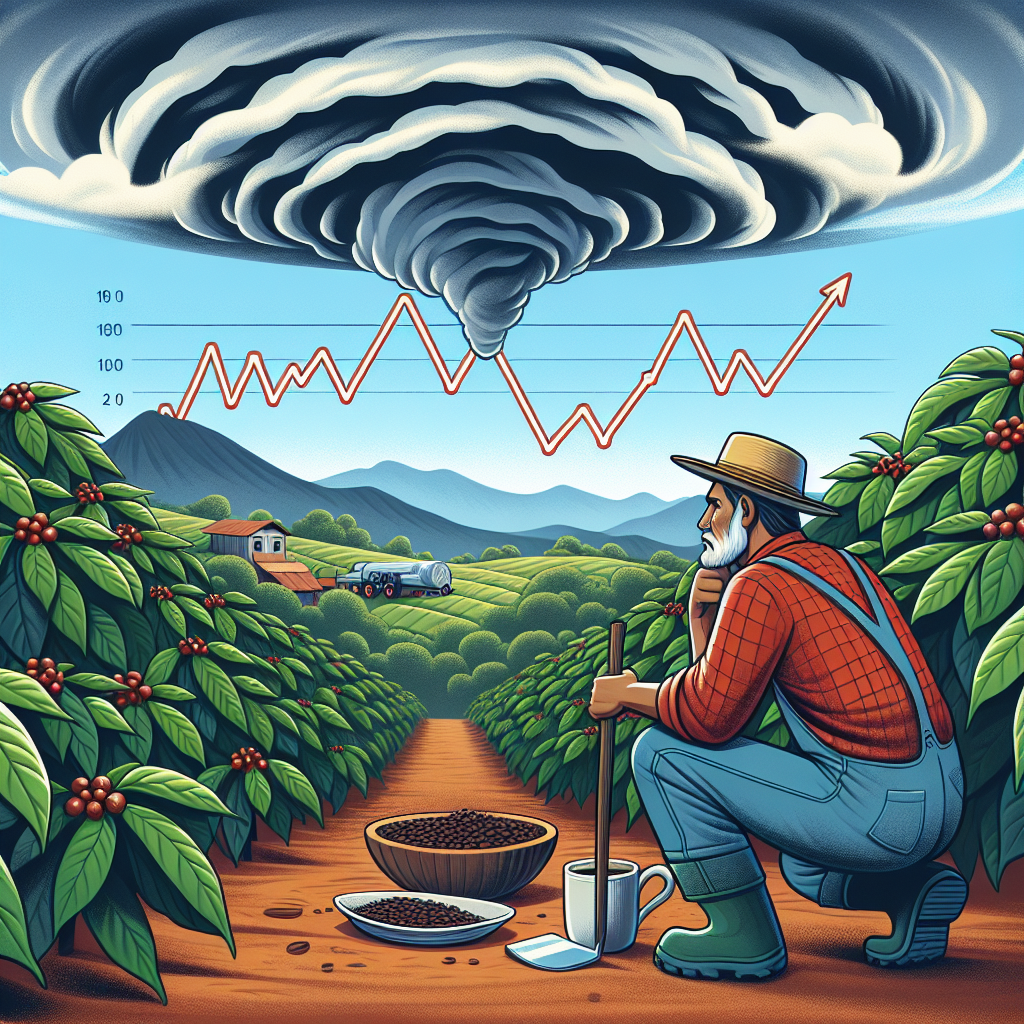
The global coffee market has always been prone to fluctuations, but the volatility experienced in 2024 has reached unprecedented levels. Climate change, supply chain disruptions, and speculative trading have all contributed to significant swings in coffee prices.
These shifts are having a profound effect on coffee farmers, especially smallholder producers, who are most vulnerable to such unpredictable market changes.
Understanding coffee futures and market volatility
Coffee futures are financial contracts that allow traders, producers, and buyers to agree on a fixed price for the future delivery of coffee beans. These contracts serve as a risk management tool by locking in a price for coffee, helping to stabilize prices and offer some protection against market volatility.
For large players, such as multinational corporations, futures contracts provide a level of predictability. However, for smallholder farmers, these instruments are often inaccessible due to lack of financial resources or knowledge of the tools. As a result, these farmers remain exposed to price instability, leaving them vulnerable when coffee prices fluctuate significantly.
Coffee futures are traded on major commodity exchanges, and the market’s speculative nature can often contribute to wild price swings. Investors may buy or sell coffee futures based on trends or expected supply changes, which can cause prices to fluctuate independently of actual market demand. For example, if investors anticipate a shortage due to potential weather disruptions in coffee-producing countries, futures prices may rise sharply, regardless of whether these disruptions materialize.

Recent fluctuations: A perfect storm
In 2024, the coffee market has been hit by several simultaneous crises, leading to unprecedented volatility. Climate change continues to be a major factor, with erratic weather patterns severely disrupting coffee production in key growing regions. Brazil, the world’s largest coffee producer, experienced droughts followed by unexpected frosts that affected the flowering stage of coffee plants, reducing output by up to 20%. According to a report by Reuters, these weather conditions have drastically diminished Brazil’s arabica coffee production, contributing to global supply shortages.
Vietnam, the second-largest coffee producer, has faced its own challenges with heavy rainfall during the critical post-harvest season, delaying shipments and causing logistical disruptions. The result has been further tightening of global supply, pushing prices upward. These events have created significant uncertainty for coffee farmers who rely on stable weather conditions and predictable market demand to sustain their livelihoods.
Geopolitical tensions, particularly the Russia-Ukraine conflict, have exacerbated the situation by disrupting global trade routes. Europe, a major hub for coffee transit, has faced blockages in key routes, making it more difficult for coffee-producing countries in Southeast Asia and Africa to ship products to Western consumers. Bloomberg noted that these disruptions have compounded logistical challenges for the agriculture sector, which was already struggling to recover from the COVID-19 pandemic.
Speculative trading has also contributed to market volatility. As coffee prices rose due to supply fears, investors began trading futures more aggressively, driving prices even higher. The Financial Times reports that speculative activity in the commodities market has amplified price swings, creating artificial inflation that does not reflect real market conditions. For smallholder farmers, who do not engage in these markets, these price shifts can be devastating, as they often lack the tools to hedge against such volatility.

The impact on coffee farmers
The consequences of coffee price fluctuations are particularly severe for smallholder farmers, who account for nearly 80% of the world’s coffee supply. In Brazil, the 20% drop in arabica output has already resulted in significant income losses for many coffee-growing families. For those in Vietnam, delayed shipments due to excessive rainfall mean missed opportunities to sell at favorable prices, increasing financial strain on rural communities that rely heavily on coffee exports.
For many farmers, the focus on monoculture—growing only coffee without diversifying crops—leaves them highly dependent on the coffee market’s fortunes. When prices collapse, they have few alternatives to cushion the blow. The effects of such volatility extend beyond individual farmers, impacting entire coffee-growing regions where communities depend on coffee as their main economic driver. Moreover, the rising costs of inputs such as fertilizers and labor—compounded by unpredictable revenue streams—have made it increasingly difficult for farmers to maintain their livelihoods.
Potential solutions to market instability
There is growing recognition of the need for solutions that can help coffee farmers cope with market volatility. One potential approach is expanding access to hedging tools like futures contracts. Providing smallholders with education and financial support to engage with these risk management strategies could help protect them from unpredictable price shifts. Governments and international organizations could play a role in delivering these tools through targeted programs that address financial literacy and accessibility for rural farmers.
Another key solution lies in crop diversification. By encouraging farmers to grow additional crops alongside coffee, communities can reduce their dependence on a single commodity and generate alternative revenue streams. Diversification can also make farms more resilient to the adverse effects of climate change, which often impacts coffee production disproportionately.
Sustainability certification programs, such as Fair Trade and Rainforest Alliance, also offer farmers access to more stable markets. These programs incentivize sustainable farming practices and provide higher premiums for high-quality, environmentally friendly coffee. Fair Trade, in particular, has emphasized the importance of stabilizing prices to prevent extreme fluctuations from destabilizing farmer cooperatives.
Finally, improving infrastructure in coffee-growing regions—such as better transportation networks and storage facilities—could mitigate some of the logistical challenges that exacerbate market volatility. Ensuring that coffee can reach global markets efficiently, even amid external disruptions, would allow farmers to sell their crops on time and at better prices.

The volatility of coffee futures in 2024 underscores the vulnerabilities faced by coffee farmers, especially smallholders in key producing regions like Brazil, Vietnam, and Colombia. While the use of futures contracts helps large-scale traders mitigate risks, smallholder farmers are often left to weather the storm of price fluctuations on their own.
By investing in education, diversification, and infrastructure, there is hope that the coffee industry can build greater resilience for its farmers, ensuring a more sustainable future for the millions who rely on this critical crop.




 Coffee Digest