
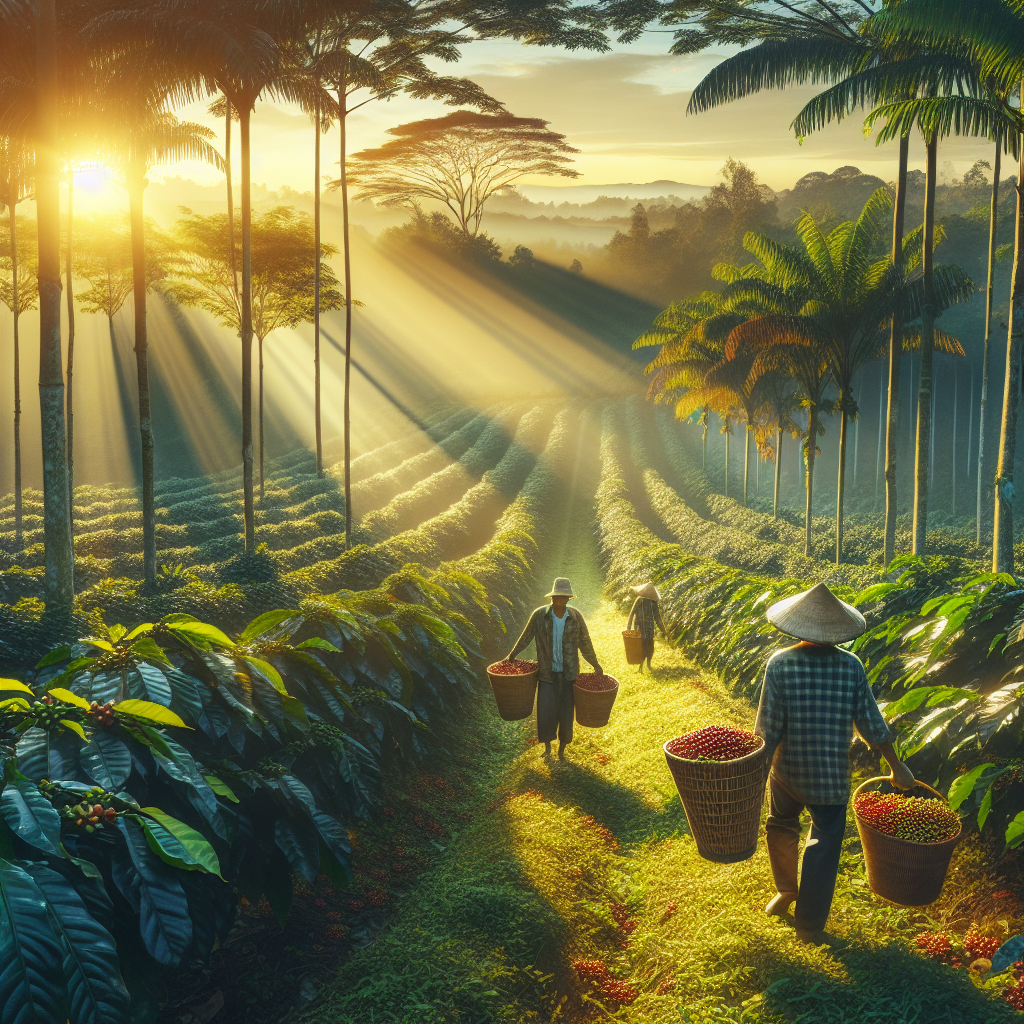
The global coffee industry is confronting an unprecedented crisis. With the rapid advancement of climate change, coffee farmers are struggling to adapt to rising temperatures, unpredictable rainfall patterns, and the proliferation of pests and diseases. A National Geographic report warns that by 2050, half of the world’s suitable land for growing coffee could be lost due to climate change – this alarming projection has prompted the coffee industry to explore more sustainable and resilient farming systems.
One promising alternative is agroforestry—a method that integrates trees with crops, such as coffee. Advocates of agroforestry argue that it not only enhances crop resilience but also contributes to restoring degraded ecosystems. The key question remains: Is agroforestry a viable long-term solution for the coffee industry? Furthermore, does it offer financial sustainability for smallholder farmers who produce the majority of the world’s coffee?
Shade-grown coffee vs. Agroforestry: Understanding the difference
While shade-grown coffee and agroforestry are often seen as part of the same sustainable farming spectrum, there are key differences between the two. Shade-grown coffee refers to coffee grown under a canopy of trees, providing protection from direct sunlight. Traditionally, coffee has been cultivated in shaded environments, as the plants thrive under moderate light and cooler temperatures. The trees in a shade-grown system help regulate temperature and provide habitat for wildlife, contributing to greater biodiversity.
Agroforestry, while often incorporating shade-grown practices, goes beyond simply providing shade. It is a more comprehensive system that involves integrating multiple species of trees and crops into a farm’s ecosystem. In an agroforestry model, trees serve additional functions such as improving soil health through organic matter, retaining water, and reducing the need for chemical inputs. Unlike shade-grown coffee, which primarily focuses on providing a protective canopy for coffee plants, agroforestry fosters a more diverse and resilient agricultural environment by promoting ecosystem services and supporting additional crops like fruits or timber for supplementary income.
While shade-grown coffee can be considered a subset of agroforestry, the latter encompasses a broader range of practices and benefits, making it a more holistic approach to sustainable farming.
The environmental crisis facing coffee farming
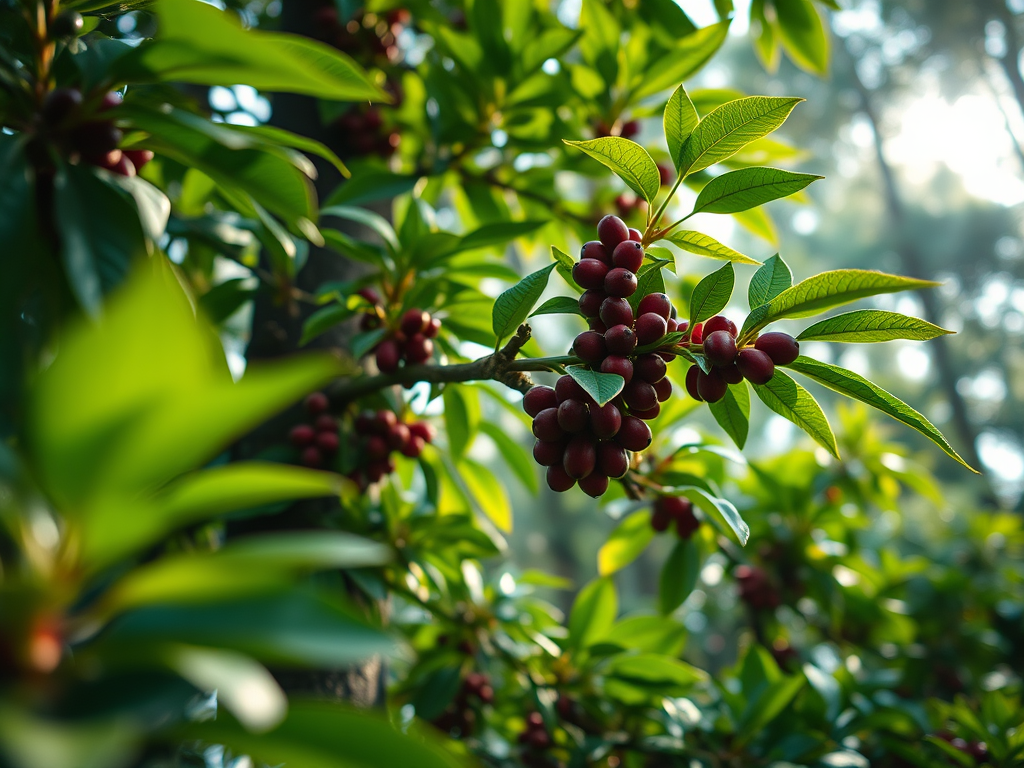
Coffee cultivation today is facing severe environmental challenges, largely driven by deforestation and climate change. In many key coffee-producing regions—such as Latin America and Southeast Asia—forest cover has been cleared extensively to make room for agricultural expansion. The result is increased soil degradation, where nutrient-rich topsoil is eroded or loses fertility over time, significantly reducing productivity. The loss of biodiversity due to deforestation further exacerbates the ecological imbalance, negatively impacting natural pest control, pollination, and other ecosystem services essential for coffee farming.
Climate change presents a particularly existential threat to traditional coffee-growing areas. Rising temperatures are making lower-altitude farms increasingly unviable due to heat stress on coffee plants. Conversely, regions at higher altitudes—which were once considered too cold for coffee cultivation—are now emerging as potential new growing zones.
However, the shift of coffee farming to higher altitudes is not a comprehensive solution. A study published in Nature Communications revealed that the “climate suitability for Arabica—the most popular variety of coffee—could decrease by up to 50% across major producing countries”. This stark reality underlines the need for innovative approaches like agroforestry to bolster the coffee industry’s climate resilience.
Understanding agroforestry in coffee farming
Agroforestry refers to a land management system that incorporates trees into agricultural practices. In the context of coffee farming, this entails planting tree species that provide shade and contribute to a healthier microclimate around coffee plants. Rather than engaging in conventional monoculture systems where forests are completely cleared, agroforestry allows for a more harmonious relationship between farmed crops and native vegetation.
This method offers several ecological benefits. For one, trees help regulate microclimates on coffee farms by providing much-needed shade, which protects coffee plants from excessive sunlight and high temperatures. Additionally, trees contribute to water retention in the soil, thanks to their deep root systems, and they improve soil health by adding organic matter through decaying leaves and branches. These elements collectively reduce the need for synthetic fertilizers and pesticides, making agroforestry a more sustainable alternative to conventional coffee farming methods, which depend heavily on chemical inputs.
Agroforestry systems are also seen as a way to combat the negative impacts of deforestation. When trees are integrated into coffee farming landscapes, they support greater biodiversity. Forest remnants preserved as part of an agroforestry system can act as habitat corridors for wildlife, facilitate carbon sequestration, and enhance ecosystem services such as pollination and natural pest regulation.
According to a paper published in Agriculture Ecosystems & Environment, agroecological approaches—including agroforestry—are critical for increasing the climate resilience of coffee farming systems. “[T]he adoption of agroforestry systems with 50 % shade cover can reduce the mean temperatures and maintain 75 % of the area suitable for coffee production in 2050,” wrote the authors. “Our study indicates that major shifts in areas suitable for coffee production may take place within three decades, potentially leading to land conflicts for coffee production and nature conservation.”
Benefits of agroforestry for coffee farmers
For smallholder coffee farmers, who account for nearly 80% of the global coffee supply, agroforestry presents both ecological and economic advantages. By improving soil fertility and preventing erosion, agroforestry reduces input costs associated with fertilizers and land rehabilitation.
At the same time, the diversified agroforestry model allows farmers to harvest additional products—such as fruits, timber, and firewood—from the trees planted alongside their coffee crops. This diversification provides supplementary income streams, making farmers less dependent on volatile coffee prices.
Furthermore, agroforestry systems enhance the long-term viability of coffee farming by improving the overall resilience of farms to climate shocks. A report by the World Agroforestry Centre highlights that “coffee grown under shade trees tends to be more resilient to extreme weather events, including droughts and heatwaves, compared to monoculture coffee farms”. Such resilience is critical in regions where climate variability is becoming the norm rather than the exception.
Challenges to widespread adoption
Despite its numerous benefits, the implementation of agroforestry in coffee farming is not without challenges. One significant obstacle is the lack of financial resources available to smallholder farmers to invest in tree planting and farm diversification. Even when agroforestry is proven to deliver long-term gains, the initial costs and labor required can be daunting for individual farmers who already operate on tight margins.
Moreover, transitioning from conventional monoculture practices to agroforestry often necessitates technical support and ongoing education. Farmers in rural regions may lack access to proper extension services that convey the latest agroecological knowledge. Without support structures in place, widespread adoption of agroforestry remains difficult to achieve.
Additionally, market access continues to be an issue for many smallholder farmers. While certification schemes such as organic or Fair Trade offer higher premiums for agroforestry-grown coffee, these opportunities are often accompanied by stringent requirements or certification fees that can be prohibitive for resource-constrained farmers.
Nonetheless, governments, development agencies, and stakeholders within the coffee value chain are increasingly recognizing the importance of scaling agroforestry solutions. The push towards sustainable coffee production is reflected in initiatives such as the United Nations REDD+ framework, which incentivizes efforts to reduce emissions from deforestation and forest degradation through agroforestry practices. Government policies, coupled with private-sector investment, will play a pivotal role in encouraging more farmers to adopt agroforestry on a broad scale.




 Coffee Digest