

For years, Starbucks has been a global leader in coffee culture. In China, the Seattle-based giant initially enjoyed dominance by introducing millions of Chinese consumers to premium coffee experiences. However, recent shifts in consumer behavior and market dynamics have resulted in Starbucks losing its position as China’s largest coffee chain. In early 2024, Luckin Coffee officially overtook Starbucks in terms of store count and revenue, signaling a major shift in the Chinese coffee market.
Luckin Coffee’s rapid ascent in China’s competitive landscape raises questions about whether Starbucks can reclaim its stronghold or if it will remain overshadowed by a more agile, tech-driven rival. The battle for market share not only highlights evolving consumer preferences, but also Luckin’s innovative strategies, which have enabled it to cater to the demands of China’s digitally savvy population far more effectively than Starbucks.
Evolving coffee preferences among younger consumers
China’s younger generation, particularly millennials and Gen Z, are driving a remarkable shift in the nation’s coffee consumption patterns. These younger cohorts differ from their parents, who traditionally favored tea over coffee, by embracing Western-style drinks such as lattes, cappuccinos, and cold brews. However, unlike Western consumers, convenience is paramount for these customers.
A report by McKinsey suggested that Chinese consumers “… are increasingly opting for convenience and speed in their food and beverage purchases, with delivery platforms only scratching the surface of this vast demand”. This preference aligns directly with Luckin Coffee’s digital-first business model, which emphasizes app-based orders and convenient delivery services. By integrating technology into every step of the sales process, Luckin has appealed to time-conscious urban professionals, students, and other fast-paced consumers.
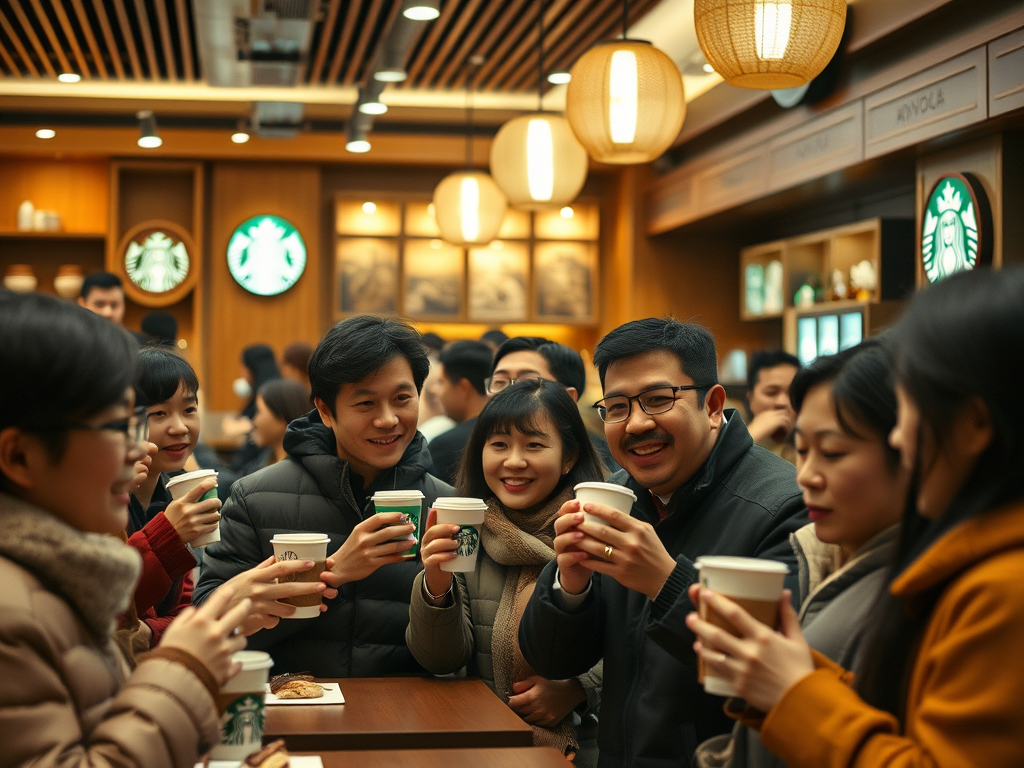
In contrast, Starbucks’ traditional focus on creating a “third place” for consumers – an inviting atmosphere where individuals can relax or work – may no longer resonate as strongly with younger Chinese consumers. While some still seek out Starbucks venues for socializing or work, the accelerating demand for quick, efficient service via mobile platforms is becoming a higher priority in China’s bustling urban centers.
The contrast in brand philosophies underscores how Luckin Coffee leverages convenience as a competitive edge amidst China’s ongoing lifestyle transformation.

Luckin Coffee’s data-driven approach to expansion
According to Luckin’s financial reports published in February 2024, the company’s net revenue for the fourth quarter of 2023 soared to 7.06 billion yuan ($980 million). This marks an astonishing 91.2 percent year-on-year increase – and one that has outshone Starbucks’ annual sales in China, which stood at $3.16 billion, propelling Luckin to the forefront of the Chinese coffee market.
A crucial factor contributing to Luckin’s rise as the largest coffee chain in China is its data-centric expansion strategy. By utilizing external and internal data sources, including partnerships with major platforms such as Meituan and Baidu Maps, Luckin has optimized its store locations and marketing efforts.
Through such data-driven insights, Luckin strategically mapped out its rapid expansion across China while offering personalized promotions tailored to specific customer segments. This stands in stark contrast to Starbucks, which typically relies on more traditional methods of site selection driven by foot traffic within physical stores. The ability to integrate multiple layers of customer data, including location and behavioral insights, has given Luckin a clear advantage in terms of precision and speed.
Moreover, Luckin has partnered with leading Chinese technology companies to further enhance its operational efficiency and customer convenience. Collaborations with platforms like Ele.me, a subsidiary of Alibaba’s online-to-offline ecosystem, have strengthened Luckin’s supply chain and logistical capabilities, ensuring a seamless experience for consumers from ordering to delivery.
This approach allows Luckin to adapt quickly to shifts in consumer demand and logistical challenges, providing timely deliveries even in regions where traditional infrastructure might face disruptions. The combination of offline retail presence and a robust digital infrastructure has positioned Luckin as a tech-savvy competitor in China’s coffee industry, enabling it to meet the needs of its hyper-connected audience accustomed to instant gratification.

Could Starbucks bounce back?
To regain its dominant position in China, Starbucks will need to evolve its strategy, adapting to the fast-changing demands of Chinese consumers. One of the key areas for improvement lies in strengthening its digital integration and delivery services. Unlike Luckin Coffee, which built its success around a mobile-first business model, Starbucks has traditionally focused on the in-store experience.
However, the growing preference for convenience and speed among China’s younger consumers suggests that Starbucks should invest more heavily in its mobile app and delivery partnerships. Expanding collaborations with major delivery platforms such as Meituan and Ele.me, while offering more exclusive deals for mobile users, might allow Starbucks to enhance convenience and increase customer engagement.
Additionally, Starbucks will need to focus on product innovation, particularly by introducing more localized and trendy offerings. Luckin’s success with drinks like the popular coconut latte and limited-edition collaborations, such as their Moutai-infused coffee, highlights the importance of catering to local tastes and preferences. Starbucks could capitalize on its premium brand image by releasing exclusive products designed specifically for the Chinese market, appealing to younger consumers who are drawn to novelty and social media-worthy experiences.
Another important strategy would involve using more data-driven approaches to understand consumer behavior. Starbucks has relied on a traditional retail model, but leveraging customer data to tailor promotions and personalize the customer journey – similar to what Luckin has done –could improve customer loyalty and satisfaction. By refining its tech infrastructure and incorporating a more agile approach to marketing and operations, Starbucks has the potential to bounce back and regain its footing in China’s dynamic coffee market.
Luckin Coffee’s overtaking of Starbucks in China is not merely a shift in market leadership; it represents a broader transformation in Chinese coffee culture. The country’s younger, digitally savvy consumers prioritize convenience and speed over the ambiance traditionally offered by Starbucks. With its data-driven model and tech partnerships, Luckin Coffee has tapped into these shifting preferences and adapted quickly to meet the demands of a hyper-connected audience.
As China’s coffee market continues to evolve, it remains to be seen whether Starbucks can innovate fast enough to regain its top spot, or if Luckin Coffee’s approach is the new standard for success.


 Coffee Digest