
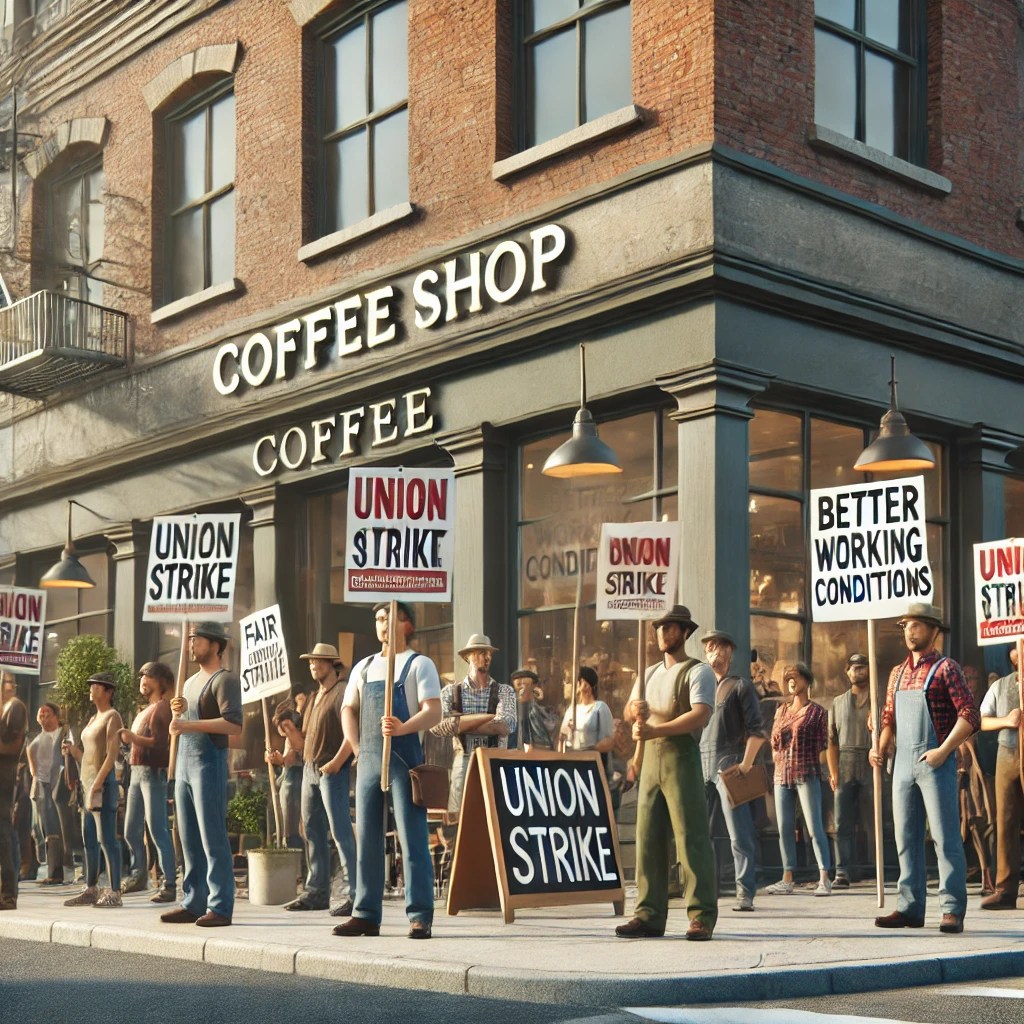
In recent years, there has been a notable rise in unionization efforts within the coffee shop industry, particularly among baristas and café workers. This shift is largely driven by dissatisfaction over low wages, erratic work schedules, limited access to benefits, and substandard working conditions—issues that have been further exacerbated by the COVID-19 pandemic.
With employees seeking better representation through collective bargaining, both independent coffee shops and major chains are being forced to reconsider how they treat their workforce. With this fueling increased unionization in coffee shops across the U.S., it may have an impact on the broader hospitality sector and the future of labor relations within this space.
Recent unionization efforts
In 2024, barista unionization efforts have continued to gain momentum, particularly through high-profile movements like those within Starbucks. Over 400 Starbucks stores have now successfully unionized, with more than 10,000 workers joining the Starbucks Workers United union across the U.S.
These efforts have focused on addressing issues like understaffing, wage disparities, and inconsistent schedules, which were exacerbated during the COVID-19 pandemic. Notably, workers from the Elmwood Avenue Starbucks in Buffalo became the first to unionize, sparking a wave of union drives across the country. This trend highlights a growing demand for improved working conditions in an industry where unionization has historically been low.
Another significant example is the Bloomington Starbucks in Indiana, where workers recently voted to unionize in June 2024. This marked the sixth unionized Starbucks location in the state, reflecting a broader movement toward unionization within the coffee industry. As the industry grapples with labor shortages and calls for better treatment of employees, these ongoing union efforts are likely to have lasting impacts on labor relations in coffee shops across the country.
Drivers of unionization
The rise in union activity among coffee shop workers can be attributed to widespread frustration over pay inequity, job instability, and insufficient workplace protections. According to data from PayScale, as of 2021, baristas earned an average hourly wage of $11.87 — a rate that struggles to keep up with the cost of living in urban areas where many coffee shops are concentrated.
The impact of COVID-19
One significant catalyst for the surge in unionization was the COVID-19 pandemic. As health restrictions forced many cafés to close or operate under reduced hours, workers faced heightened job insecurity and inadequate safety measures. This precarious situation led many employees to demand stronger protections against what they saw as widespread exploitation.
Workers’ frustrations were compounded by the fact that although baristas were deemed “essential,” many felt they were treated as disposable. Jaz Brisack, an organizer with Starbucks Workers United, highlighted these concerns while fighting for workers’ rights, before claiming she was forced to step down after Starbucks “deliberately made […] continued employment at the company impossible“.
Wage stagnation and scheduling issues
Wage stagnation and unpredictable scheduling are central reasons why many baristas have sought union representation. Despite the coffee industry’s significant growth – with well-known brands like Starbucks reporting substantial revenue gains during the pandemic – frontline workers see little of these profits. Baristas earning near-minimum wages often face highly irregular schedules, making it difficult to maintain financial stability or organize their personal lives.
The inequality between corporate profit margins and worker compensation has spurred unionization efforts. Employees believe that through unions like Starbucks Workers United (SWU), they may be able to negotiate more equitable compensation packages and secure more consistent, predictable shifts.
Case studies: Notable unionization efforts in coffee shops
Starbucks Workers United
Starbucks has been at the forefront of labor advocacy in the coffee shop sector, with numerous store locations engaging in unionization efforts under the banner of Starbucks Workers United (SWU). This movement, which began in Buffalo, New York, has garnered national attention as locations across the U.S. have entered into disputes with the corporation regarding employee rights. Workers have voiced concerns about insufficient pay and erratic scheduling, issues that remain despite Starbucks’ consistent financial success.
Colectivo Coffee Roasters
Colectivo Coffee Roasters, based in Midwest cities such as Milwaukee and Chicago, also serves as a prominent example of successful unionization. After a protracted legal battle involving disputes over ballots, Colectivo employees voted to unionize under the International Brotherhood of Electrical Workers (IBEW). Their unionization effort underscores the complex legal landscape surrounding labor organization and illustrates the role of the National Labor Relations Board (NLRB) in certifying worker rights.
The difficulty of organizing workers under legally compliant frameworks adds another layer of complexity to modern-day labor movements. However, the Colectivo case demonstrates that persistent efforts to negotiate for better working conditions can yield significant results.
Quills Coffee
Quills Coffee, headquartered in Louisville, Kentucky, saw its own surge in union interest. Employees clamored for better transparency in decision-making processes and improvements in pay and benefits. Workers felt that a more collaborative environment, facilitated by clear communication channels between management and staff, would not only boost productivity but also improve workplace morale.
Unionization efforts at Quills Coffee also highlighted the importance of fostering a positive company culture, wherein workers feel empowered and valued. In this atmosphere, employee satisfaction leads to better service for customers, benefiting the business in the long run.
Broader implications for the hospitality industry
The ongoing wave of unionization efforts in coffee shops could have far-reaching consequences for the hospitality industry as a whole. As workers across the service sector become more vocal about their rights and expectations, employers may find themselves under increasing pressure to provide higher wages, better benefits, and safer working environments.
If unionization among baristas continues to grow, it could set a precedent for other sectors of the hospitality industry, where low wages and inconsistent scheduling are similarly widespread. This could lead to broader efforts to push for collective bargaining in other service roles, unlocking a new chapter in labor relations for the entire sector. Many employers may also have to adjust their business models to accommodate a workforce that demands more say in operational decisions.
As unionization continues to expand within the coffee shop industry, it will also be important to monitor how consumers respond. Will patrons favor unionized coffee shops over non-unionized establishments? Will there be price increases that accompany higher wages and improved benefits? Only time will reveal how these variables will shape the future dynamics of coffee shop culture.



 Coffee Digest